- All
- Product Name
- Product Keyword
- Product Model
- Product Summary
- Product Description
- Multi Field Search

Views: 0 Author: Site Editor Publish Time: 2026-06-02 Origin: Site


Standard end-door shipping containers are highly efficient until you face awkwardly shaped, oversized, or side-heavy cargo. Pushing these irregular items through a narrow rear opening creates massive logistical bottlenecks. Loading crews struggle to position wide freight safely.
Enter the 40ft Side Open Container. Also known as an open-side or full-side access unit, it acts as a purpose-built solution. It provides rapid forklift access along the entire lateral wall. You gain weather-protected transport tailored specifically for oversized materials.
This guide outlines operational realities and structural limitations clearly. We break down strict criteria for shortlisting and purchasing these specialized units. Transition directly into evaluation mode. You will learn exactly how to match these heavy-duty units to your specific project needs. Evaluate your site carefully to avoid common procurement mistakes.
Side open containers reduce loading times for long or bulky cargo by allowing full lateral forklift access, eliminating the need for flat racks.
Opting for a high cube side opening door container provides an essential extra foot of vertical clearance for heavy machinery.
The bi-fold side doors add significant tare weight, slightly reducing the maximum payload capacity compared to standard standard units.
Successful deployment requires perfectly level ground; chassis flex on uneven surfaces will prevent the heavy side doors from operating correctly.
Purchasing requires strict verification of gasket integrity, locking gear condition, and valid Cargo Worthy (CW) certification if used for export.
Standard container loading requires pushing cargo linearly. Crews must stuff pallets straight through narrow rear doors. For standard palletized goods, this process works flawlessly. However, imagine moving 30-foot industrial steel pipes. Picture maneuvering oversized manufacturing components. Think about wide agricultural machinery blocks. End-loading these awkward items becomes dangerous rapidly. It proves incredibly labor-intensive. Sometimes, it is mathematically impossible without damaging the freight.
You need robust alternatives. Let us compare the Side Open Container against common heavy-cargo options.
First, consider Flat Racks. Flat racks handle bulky, overweight items exceptionally well. Yet, they expose valuable goods directly to the elements. Protecting your cargo requires expensive, specialized heavy-duty tarping. Tarps tear easily under highway wind shear. Side-open units eliminate this constant hassle. They provide total wind and watertight (WWT) security automatically. Your cargo remains locked securely inside a solid steel vault.
Next, look at Open Top containers. They allow top-down loading. However, they force you to schedule overhead cranes or heavy-duty gantries. This creates massive operational delays. Full-side access completely eliminates overhead crane scheduling. Standard warehouse forklifts can approach the unit laterally. They drop wide loads directly inside the cargo bay.
Calculate the precise ROI metrics. You will see dramatically reduced forklift hours. You drastically lower the risk of cargo damage during stuffing. Furthermore, ground-level accessibility simplifies everyday operations.
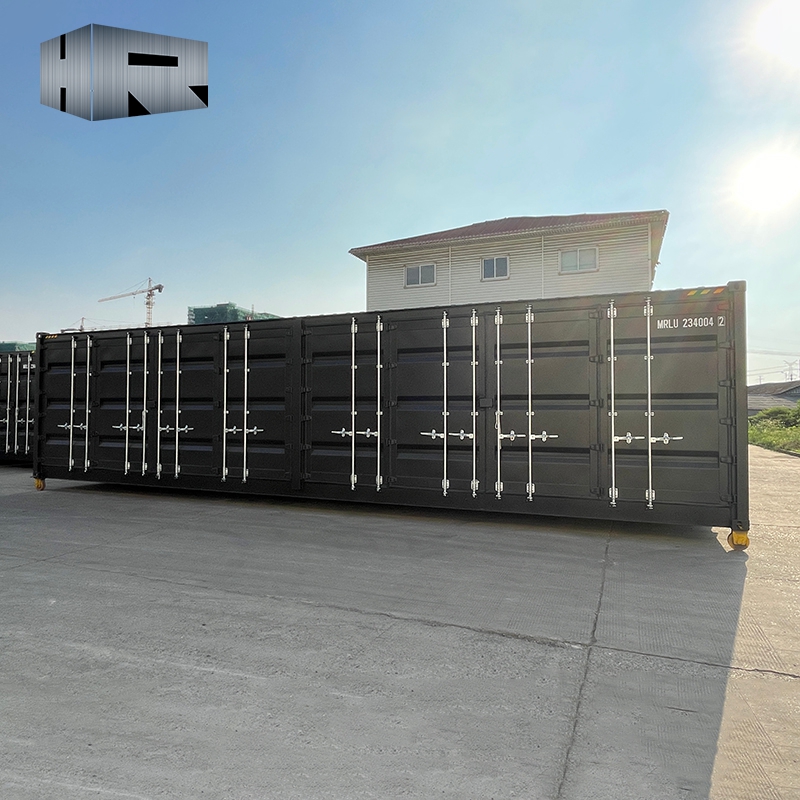
You must clarify the physical space before acquiring a unit. A standard 40ft unit stands 8 feet 6 inches tall externally. Internally, the clearance drops slightly due to floor thickness and roof corrugation. This height fits many standard shipping pallets. It often falls painfully short for specialized industrial needs.
Introduce the high cube side opening door container. This model boasts a 9-foot 6-inch external height. You gain a critical extra 12 inches of vertical space. Why does this matter? Tall industrial equipment needs vertical breathing room. Double-stacked pallets require every inch of overhead clearance. Custom architectural modifications rely on higher ceilings to feel comfortable. This single foot changes your entire spatial layout.
However, you must balance payload against volume carefully. Understand the core engineering trade-off at play. A full-side access unit lacks a solid corrugated steel side wall. Engineers must compensate for this missing structural integrity. They reinforce the roof and floor heavily. They also install massive steel bi-fold doors along the entire length.
These structural reinforcements increase the empty tare weight significantly. Heavier containers mean stricter weight limits on your actual cargo. You slightly reduce the maximum allowable payload weight compared to standard dry vans. Always run the mathematical numbers on your heaviest machinery. Ensure your freight falls safely within the permitted operating capacity.
These specialized units shine brilliantly across various industrial sectors. They solve unique spatial challenges effortlessly. Let us explore the top scenarios where they dramatically outperform standard dry vans.
Factories constantly move long steel beams. They handle fragile PVC piping daily. They ship raw timber bundles. You cannot easily angle these unwieldy items through standard rear doors. Lateral loading prevents awkward pivoting entirely. It keeps raw materials completely safe from structural bending stress.
Automotive and heavy equipment logistics benefit massively from side doors. Side access allows drivers to maneuver wide vehicles inside safely. They can easily open their car doors fully. They simply step out and exit through the side. For stationary equipment, forklifts place side-heavy generators precisely. They balance the heavy load perfectly inside the high cube side opening door container.
Think about managing high-turnover inventory. Standard units bury older items at the dark rear. Retrieving them wastes precious hours of labor. Full-side doors eliminate this frustrating dark zone completely. You treat the unit exactly like an open warehouse rack. Every single pallet remains immediately accessible from the outside.
Designers absolutely love these robust steel frames. They serve as perfect structural foundations. You see them frequently used for mobile event stages. They create stunning pop-up retail shops at festivals. Industrial sites use them as modular control rooms. These applications require a massive open facade for public interaction.
Review the application comparison chart below to understand the operational advantages:
Industry Application | Typical Cargo Type | Primary Logistical Benefit |
|---|---|---|
Manufacturing | Steel beams, pipes, timber | Straight lateral loading; prevents bending. |
Heavy Machinery | Generators, vehicles, engines | Precise forklift placement; driver exit space. |
Warehousing | High-turnover pallets | 100% accessible inventory; zero blind spots. |
Architecture | Stages, pop-up shops | Ready-made open facades; solid structural base. |
You cannot treat these complex units exactly like standard dry vans. They demand far stricter operational conditions. Facility managers must plan site layouts carefully.
We must explicitly warn every prospective buyer. Full-side units must sit on perfectly flat, solid foundations. Uneven gravel ground causes the rigid chassis to twist slightly. A twisted frame spells immediate disaster. It jams the heavy bi-fold doors instantly. It compromises the delicate weather seals. You will struggle endlessly to open or close the unit.
Opening a 40-foot lateral wall requires a massive physical footprint. You cannot place these units tight against a brick building. Facility managers must calculate the exact door swing radius meticulously. Furthermore, warehouse forklifts need deep maneuvering space. They must drive straight in and reverse straight out without hitting obstacles.
More doors naturally mean more moving mechanical parts. You add multiple locking rods instantly. You introduce dozens of heavy-duty hinges. These additions create potential points of unauthorized access. Secure every point diligently. Outline a clear security protocol. Require specialized steel lock boxes on all external access handles.
Rubber gaskets ensure the unit stays entirely weather-proof. Full-side doors feature enormous surface areas of thick rubber. These specialized seals degrade faster than standard rear-door gaskets. Constant ultraviolet sun exposure accelerates dry rot significantly. You must budget proactively for periodic gasket replacement. This routine maintenance guarantees long-term wind and watertight integrity.
Procuring these specific units requires rigorous vendor vetting. You cannot rely blindly on standard container buying checklists. Follow these dedicated evaluation criteria strictly.
Do you plan to ship your cargo internationally? You must mandate proper ocean freight documentation. Require a valid Container Safety Convention (CSC) plate prominently displayed. Demand a recent Cargo Worthy (CW) survey physically signed by a certified inspector. Ocean freight carriers strictly enforce these compliance rules.
Always perform a rigorous hands-on physical inspection. If buying remotely, demand high-resolution photos of these specific structural zones:
Hinges and Cams: The bi-fold hinge system remains highly complex. Verify there is absolutely no rust-jacking. Look closely for bent locking cams that could seize.
Gasket Integrity: Inspect the massive rubber seals carefully. Check thoroughly for hidden dry rot or tearing. Conduct a simple daylight test. Step inside, close the doors fully, and look for tiny light leaks.
Floor Condition: These wooden floors endure extreme point-loads from heavy forklifts. Ensure the reinforced steel cross-members or thick marine plywood shows zero signs of delamination.
Confirm the vendor utilizes the correct specialized delivery method. A 40ft side open unit requires serious transport infrastructure. You need a heavy-duty tilt-bed truck capable of handling the extra tare weight. Alternatively, hire a commercial side-lifter vehicle. Before finalizing the purchase order, measure your drop site accurately. Ensure it accommodates the truck's overall length. Double-check the required turning radius to avoid delivery day disasters.
Purchasing 40ft side open containers involves a definitive premium. They demand highly specific operational conditions. However, their logistical value remains unmatched. They stand unparalleled for securing oddly shaped, oversized cargo. They drastically slash traditional loading times.
Take immediate action today. Audit your physical drop site for perfect levelness. Measure your required operational clearance. Determine whether you need a standard model or a high cube version based strictly on cargo height. Finally, request highly specific photographs of hinges, seals, and floors. Do this before issuing any purchase order to shortlisted vendors.
A: Yes, they are completely safe for ocean transport. They must carry a valid CSC plate and hold a recent Cargo Worthy grading. However, their specialized heavy doors increase the unit's empty tare weight significantly. You must carefully factor this extra structural weight into all shipping manifests. This prevents overloading the vessel and ensures strict international maritime compliance.
A: Expect to pay a substantial premium compared to a standard dry van. This premium reflects their highly specialized manufacturing process. They require heavy-duty structural reinforcements to maintain integrity without a solid corrugated wall. Furthermore, lower global supply naturally drives market acquisition costs higher. Budget accordingly for these unique logistical advantages.
A: No. Standard shipping container locking mechanisms are operated strictly from the exterior. This design maintains absolute security and structural integrity during transit. Facility managers must implement strict safety protocols. Always verify the unit is entirely empty before sealing the heavy doors. This mandatory step prevents accidental personnel entrapment.


