- All
- Product Name
- Product Keyword
- Product Model
- Product Summary
- Product Description
- Multi Field Search

Views: 0 Author: Site Editor Publish Time: 2026-05-05 Origin: Site


Landscaping businesses today face relentless pressure from rising operational costs. Managing extensive equipment fleets eats into profits rapidly. Specialized vehicles often sit idle between different project phases or changing seasons. A severe shortage of CDL-licensed drivers compounds this pressing issue directly. Finding qualified operators for multiple heavy dump trucks and flatbeds remains incredibly difficult. Relying on multi-site material delivery using single-use vehicles drains your resources. This reactive approach severely limits your overall scalability.
You need a smarter, interchangeable fleet consolidation strategy. This modern approach transforms one truck chassis into a versatile, multi-purpose asset. A well-planned container system solves these exact operational bottlenecks. This guide provides a realistic, evidence-based breakdown of this specific solution. You will discover how integrating a hook lift bin system impacts daily landscaping operations. We will also explore essential sizing requirements and key procurement criteria to help you scale smoothly.
Fleet Consolidation: A single hook lift truck can perform the work of multiple single-use vehicles, reducing insurance, maintenance, and driver payroll.
Operational Agility: Container changeovers take under two minutes and can be executed up to 30 degrees off-center, solving tight-space residential access issues.
Reduced CapEx: When a truck chassis ages out, existing bins and bodies are retained and transferred to a new truck, significantly lowering long-term equipment costs.
Improved Safety: Fully in-cab, hydraulic operations eliminate the manual labor and snapping risks associated with traditional cable roll-off systems.
Owning dedicated dump trucks, flatbeds, and chipper trucks creates a financial drain. These single-use vehicles perform one specific job. They sit completely idle during off-seasons or specific project phases. You still pay insurance premiums, registration fees, and routine maintenance costs for every stationary truck. This capital expenditure traps your landscaping business in a rigid financial model. You tie up crucial cash flow in metal assets sitting uselessly in a parking lot.
The current CDL driver shortage accelerates this problem. Hiring specialized drivers for multiple heavy vehicles proves nearly impossible. Drivers command premium wages. A traditional fleet demands multiple operators to drive multiple trucks to the same job site. A hook lift system disrupts this bottleneck entirely. One qualified operator drives one truck chassis. They swap bodies as needed throughout the day. This setup maximizes a single operator's daily output and drastically reduces your payroll burdens.
Understanding the mechanical differences between traditional roll-off systems clarifies the upgrade path. Cable systems require perfectly straight alignment. Operators manually attach thick cables to heavy containers. This manual intervention creates dangerous friction points. Cables fray over time. They snap under heavy loads, causing severe injuries.
Chart: Hook Lift vs. Cable Roll-off Systems | ||
Feature | Cable Roll-off System | Hook Lift System |
|---|---|---|
Alignment | Requires perfectly straight, linear alignment. | Allows engagement up to 30 degrees off-center. |
Operation Method | Manual cable attachment outside the cab. | 100% hydraulic, controlled completely from inside the cab. |
Safety Risks | High risk of cable snapping and winch failure. | Virtually no snapping risks; purely mechanical arm lifting. |
Tight Space Access | Poor. Fails in narrow residential driveways. | Excellent. Ideal for cul-de-sacs and angled drops. |
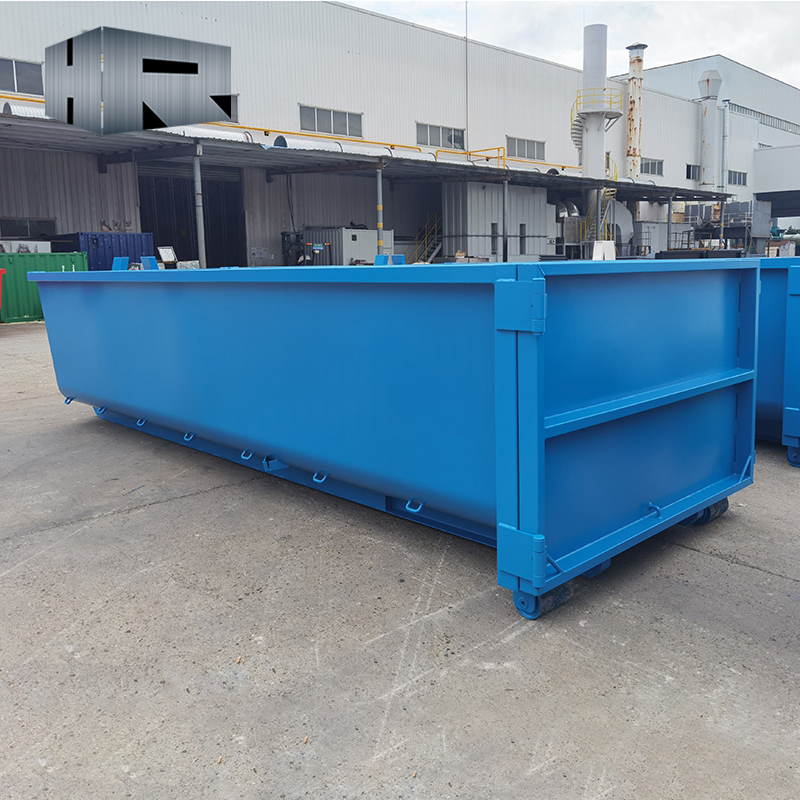
Transitioning to an interchangeable fleet model unlocks immense operational versatility. You no longer turn down jobs due to equipment limitations. Implementing these containers properly creates immediate return on investment across several daily tasks.
Bulk Material Staging and Delivery: You can drop precise amounts of soil, mulch, or gravel directly at the job site early in the morning. The main truck leaves immediately to perform other revenue-generating tasks. Your crews work steadily from the safely staged bin. They avoid waiting around for secondary material deliveries.
Heavy Debris and Hardscaping Cleanup: Hardscaping projects generate massive amounts of waste. You utilize low-sided bins specifically for heavy concrete, rock, and demolition debris. This keeps the job site highly organized. You separate recyclables effectively. This smart sorting avoids expensive mixed-load dumping fees at local transfer stations.
Equipment Transport (Flatbed functionality): A chassis does not only carry high-walled containers. You can swap a standard waste container for a flatbed skid. This allows you to transport skid steers, mini-excavators, or wheel jacks safely. You completely eliminate the need for a separate heavy towing setup or trailer.
Seasonal Revenue Shifts: Landscaping businesses must survive winter downtime. You transition smoothly from summer landscaping to winter operations easily. You swap standard bodies for salt spreaders or snow-hauling containers. Utilizing a hook lift bin across various municipal and commercial winter contracts ensures year-round asset utilization. Your truck never sits idle.
Shifting your fleet strategy fundamentally changes your capital expenditure (CapEx) and operational expenditure (OpEx) balance. You buy the primary hydraulic hoist system once. A truck chassis naturally depreciates over hundreds of thousands of miles. When the truck engine or transmission finally ages out, you do not lose your entire investment. You simply buy a new cab-and-chassis. You transfer the existing hydraulic hoist over to the new truck. You retain your entire inventory of specialized bins. This cycle significantly lowers long-term equipment costs over decades of operation.
Turnaround efficiency dictates daily profitability. Faster turnarounds mean more billable runs per single workday. Container changeovers using hydraulic arms take under two minutes. An operator backs up, engages the hook, lifts the body, and secures it without stepping outside. A traditional cable system often takes ten to fifteen minutes per swap. Multiplying those saved minutes across multiple daily drops yields hundreds of reclaimed labor hours annually.
Risk mitigation directly impacts your insurance premiums and liability exposure. The safety protocol improves dramatically upon adoption.
Zero Cable Wrestling: Operators never leave the cab to drag heavy, greasy cables across muddy ground.
No Snapping Hazards: Cable tension breakages cause catastrophic injuries. Hydraulic arms eliminate this mechanical flaw completely.
Reduced Slip and Falls: Keeping the driver safely in the heated or air-conditioned cab reduces weather-related job site slips.
Lower Workers' Comp Claims: Fewer physical interactions mean fewer crushed fingers, strained backs, and costly medical claims.
Selecting the right container size determines your project efficiency. Bigger containers do not automatically equal better results. You must match specific container volumes to your typical project scope and chassis weight limits.
Smaller 10 to 15-yard bins perfectly fit high-density residential work. They navigate tight driveways easily. You use these specific sizes for heavy materials like wet dirt, dense clay, or broken concrete. These dense materials cause weight limits to max out long before the container volume fills up. Overloading a massive container with dirt leads to severe consequences.
The 20 to 30-yard bins represent the sweet spot for mid-size commercial landscaping. They handle bulk brush removal efficiently. They carry massive loads of lightweight mulch flawlessly. You use these for branches, leaves, and light organic waste.
Weight distribution and chassis limits require strict attention. Over-sizing bins on a smaller, lighter chassis leads to disastrous results. You risk immediate Department of Transportation (DOT) fines for exceeding gross vehicle weight ratings. You also cause premature hydraulic wear and severe chassis frame warping. Always consult payload charts carefully.
Evaluating your equipment supplier matters immensely. Partnering with a reputable hook lift bin manufacturer ensures you receive highly durable, perfectly matched equipment. You must look for specific manufacturing standards.
High-Tensile Steel Construction: Ensures the container withstands daily abuse from rocks and excavators.
Continuous Welding: Avoid manufacturers utilizing cheap stitch welding. Continuous welds prevent water intrusion and rust rot.
Rust-Resistant Primer Processes: Quality paint systems extend the container's visual appeal and structural life.
Hoist Compatibility: The manufacturer must match A-frame heights and specific lock-down mechanisms exactly to your truck's hoist brand.
Adopting this system simplifies operations, but you must acknowledge implementation realities. Operator training remains absolutely critical. The controls seem incredibly intuitive. However, improper use damages expensive truck components quickly. You must enforce the Power Take-Off (PTO) protocol strictly.
The PTO transfers engine power to the hydraulic system. Operators must learn the exact sequence for engaging and disengaging the PTO. Engaging the PTO at high engine RPMs shatters gears. Driving down the highway while leaving the PTO engaged destroys the transmission entirely. You must implement mandatory training sessions before handing over the keys.
Hydraulic system maintenance cannot be ignored. Sales pitches highlight reliability, but physical realities demand proactive care. Hydraulic systems require strict, scheduled fluid level checks. Technicians must inspect high-pressure hoses for minor abrasions weekly. You must enforce daily lubrication of the main pivot points. Skipping grease applications causes metal-on-metal wear. This negligence leads directly to costly, preventable downtime during peak landscaping seasons.
Site assessment represents the final operational hurdle. Drivers cannot blindly drop containers anywhere. You must establish strict pre-drop checklists. Operators must look up first. Checking for low-hanging overhead power lines prevents fatal electrocutions during the high-angle lifting phase. They must assess ground soil compaction carefully. Transferring thousands of pounds shifts the truck's center of gravity rapidly. Soft, rain-soaked mud causes the rear axles to sink deeply. This ruins the client's property and requires expensive tow truck recoveries.
Transitioning to an interchangeable fleet model shifts a landscaping business fundamentally. You move away from a reactive, vehicle-heavy burden. You embrace an agile, container-based logistics model. This shift empowers your crews, protects your bottom line, and maximizes operator output.
Fleet managers should immediately audit current vehicle utilization rates. Count how many specialized trucks sat idle over the past six months. Then, map out a phased transition plan. Start small. Procure one reliable chassis. Pair it alongside three or four multi-purpose bodies. This calculated rollout proves the concept while immediately lowering your daily overhead.
Consolidating vehicles reduces insurance and routine maintenance costs drastically.
In-cab hydraulic controls protect drivers and lower workers' compensation risks.
Retaining bins while only replacing aging truck chassis lowers your long-term equipment spend.
Proper PTO training and daily site assessments remain crucial to prevent mechanical failures.
A: The initial setup cost for the hydraulic hoist runs slightly higher. However, you achieve massive long-term savings through fleet reduction. You buy one chassis instead of three separate vehicles. You also eliminate expensive, recurring cable-replacement costs associated with older roll-off models.
A: No. You must match exact hook heights, rail widths, and safety locking mechanisms. Not all bins feature universal interchangeability. Using mismatched equipment causes fatal dropping hazards. Always consult your manufacturer to ensure precise A-frame compatibility without requiring unsafe aftermarket modifications.
A: The articulating arm successfully grabs containers up to 30 degrees off-center. However, the truck chassis still requires a reasonably stable, level surface. Loading heavy materials shifts the center of gravity drastically. Operating on soft mud risks sinking the rear axles or tipping the entire vehicle.


