- All
- Product Name
- Product Keyword
- Product Model
- Product Summary
- Product Description
- Multi Field Search

Views: 0 Author: Site Editor Publish Time: 2026-05-20 Origin: Site


Commercial waste management faces unprecedented pressure today. Labor shortages continue to drive up operational expenses across the board. Strict environmental compliance forces site operators to fundamentally rethink outdated disposal practices. Relying on bloated fleets of single-purpose vehicles no longer works in a modern economy. The industry demands smarter, leaner, and more adaptable logistics.
Traditional static skip bins waste valuable time and resources. Transporting these containers requires multiple trips, complex planning, and heavy reliance on specialized lifting cranes. Moving away from static bins helps companies scale operations. This shift brings modular, hydraulic-driven hook lift systems directly to the forefront of waste logistics.
We provide procurement managers, fleet operators, and site supervisors with a clear, evidence-based evaluation framework. You will discover how a strategic hook lift bin investment impacts daily efficiency. You will also learn exactly how to evaluate and shortlist the right manufacturing partners for your fleet.
Fleet Consolidation: A single hook lift truck chassis can service multiple specialized containers, drastically reducing capital expenditure on vehicles.
Operational Efficiency: Features like rear walk-in doors and in-cab hydraulic controls improve load times and reduce manual handling injuries.
Scalability: Sizing ranges from 6m³ (compact urban) to 50-yard commercial containers, allowing businesses to adapt to project scope without over-committing resources.
Vendor Selection: Partnering with a specialized hook lift bin manufacturer ensures custom modifications (e.g., anti-corrosion coatings, segregated compartments) that align with specific material streams.
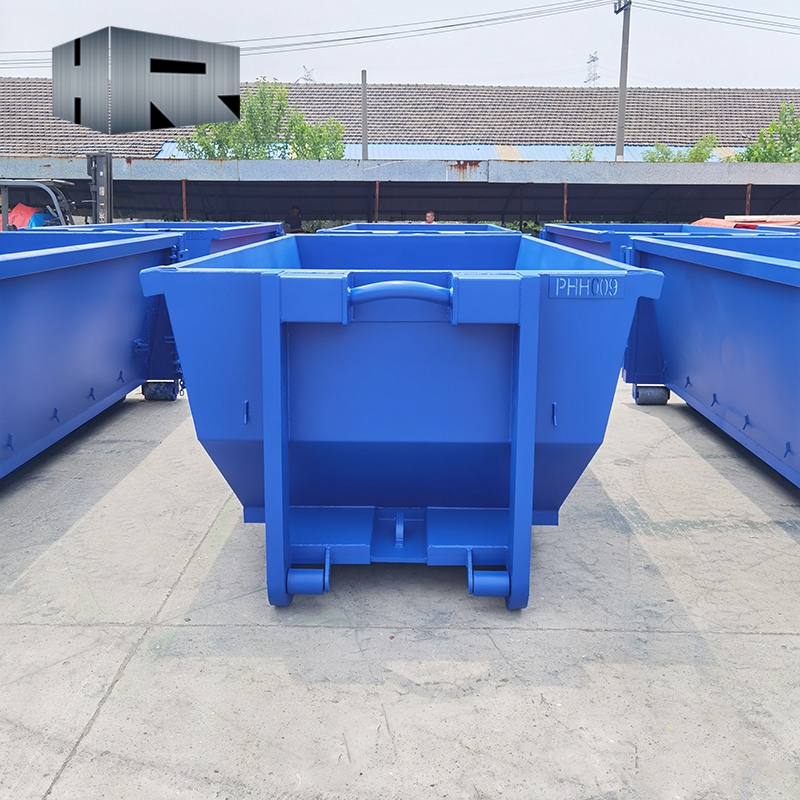
Standard skip bin fleets carry hidden expenses. Trucks often sit completely idle waiting for site crews to load material. Drivers waste countless hours making multiple trips for different waste streams. Operations rely heavily on specialized lifting cranes just to move heavy containers. These daily inefficiencies quickly drain project budgets.
The hook lift solution changes this operational dynamic entirely. It introduces a modular system architecture. This system combines a standard truck chassis, a hydraulic lifting arm, and interchangeable containers. You separate the transport vehicle from the actual storage container. This decoupling unlocks massive logistical freedom.
Decoupled logistics maximize truck uptime immediately. A driver drops an empty bin at a job site and drives away. They head straight to another job to pick up a full container. Driver utilization skyrockets. Fuel consumption drops because trucks run optimized, continuous routes instead of pausing.
Best Practice: Schedule drop-offs during off-peak traffic hours. This ensures drivers maximize their daily transport routes.
Common Mistake: Leaving standard trucks idling on site while crews load. This burns fuel and wastes driver wages.
Operational Metric | Traditional Skip Fleet | Hook Lift System |
|---|---|---|
Driver Utilization | Low (Drivers wait on site) | High (Drop and drive away) |
Vehicle Requirements | Multiple dedicated trucks | One chassis, multiple bodies |
Loading Method | Over the side (Crane/Manual) | Walk-in rear access doors |
Route Efficiency | Poor (Frequent empty runs) | Excellent (Continuous loop) |
Modern engineering turns waste collection into a highly safe, streamlined process. Let us look at specific features driving these mechanical improvements. Safety starts directly in the driver’s seat.
In-cab operations revolutionize driver safety on site. Drivers deploy and retrieve containers without ever leaving the cabin. They use advanced hydraulic controls directly from their seat. This keeps them isolated from hazardous site conditions. It completely eliminates manual rigging risks and dangerous pinch points.
Walk-in accessibility changes how ground teams load material. Many units feature roll-off access doors at the rear. Workers walk directly into the container. They carry heavy debris straight in using wheelbarrows. This prevents severe manual handling injuries. Tossing heavy objects over high sidewalls is no longer necessary.
Step-wall ergonomics further improve loading conditions. Step-wall designs lower the loading height on the sides. They maintain overall volume capacity while giving crews easier side access. This proves essential for residential sites. Hand-loading becomes significantly less taxing on the shoulders and back.
Space optimization provides a massive site advantage. These containers maneuver beautifully in tight urban corridors. You can easily stack empty containers at staging yards. This footprint reduction keeps sites clean and organized. It prevents clutter from delaying other construction activities.
Many assume hook lifts only handle demolition debris. This stereotype limits their true operational potential. We should reframe this system as a versatile multi-tool. It serves both municipal and commercial operations effectively. A single chassis manages diverse applications across multiple sectors.
You can unlock new revenue streams by utilizing a hook lift bin across various unique environments. Let us explore how different industries leverage this interoperability to streamline complex daily workflows.
Construction & Landscaping: Companies maximize their transport legs. They deliver bulk materials like soil and aggregate on the inbound trip. They haul away site debris on the outbound trip. No empty miles are ever driven.
Specialty Recycling: You can deploy pop-up recycling centers instantly. Compartmentalized bins work perfectly for temporary events or retail hubs. They keep public spaces clean and sort materials directly at the source.
Fluid & Sludge Management: The same chassis handles liquid waste easily. You simply swap standard bins for vacuum tanks or water bodies. Operators also use specialized rendering containers on the exact same truck.
This versatility simplifies your entire logistics chain. You stop buying specialized trucks for every new contract. You simply acquire the specific body type required. The core hydraulic system handles the heavy lifting.
Choosing the right partner dictates your operational success. A proven manufacturing partner provides more than just a steel box. They engineer strategic solutions. You need a structured approach to evaluate them.
Material quality and durability stand first in line. Look for high-grade, corrosion-resistant steel. Reinforced stress points are absolutely essential. They must withstand heavy, abrasive loads over time. Weaker steel buckles under the pressure of concrete and scrap metal.
Customization capabilities separate great vendors from average ones. Your supplier should offer project-specific mechanical add-ons. Weather-proof lids prevent excess water weight at the weighbridge. Custom signage builds your local brand visibility. Internal dividers enable efficient multi-stream recycling directly on site.
Compliance and safety standards require strict daily attention. Ensure the manufacturer integrates certified safety locking mechanisms. Secure tie-down points keep heavy loads stable during transport. Reinforced edges must meet or exceed regional transport authority standards. Failure here risks severe regulatory fines.
Sizing alignment ensures optimal fleet efficiency. Verify the supplier can build the exact volume you need. Sizes range from 10-15 yards for residential or narrow access. Industrial clearing demands 40-50 yard giants. Metric equivalents usually span from 6m³ to 30m³. You must match the box size to your specific contract demands.
Criteria | What to Look For | Red Flags |
|---|---|---|
Material Grade | High-tensile, corrosion-resistant steel | Thin gauge steel, poor welding seams |
Customization | Lids, dividers, custom paint, decals | Refusal to modify standard templates |
Safety Features | Certified locking mechanisms, tie-downs | Lack of regional safety certifications |
Size Range | Scalable from 6m³ to 30m³ | Limited to only one or two sizes |
Implementation requires careful planning and precise measurement. You must navigate several rollout realities to ensure project success. Overlooking basic physical constraints leads to expensive operational bottlenecks.
Chassis compatibility always comes first. You must match the bin’s rail dimensions to your current fleet. Hook height must align perfectly with existing hydraulic hoist systems. Mismatched equipment causes severe operational delays. Drivers cannot safely lift incompatible containers.
Site footprint requirements need thorough evaluation. Bins themselves remain quite compact. However, the hydraulic arm requires a specific deployment arc. This dynamic arc demands adequate overhead clearance. It also requires sufficient linear space for the truck to maneuver safely during the drop.
Buy versus lease considerations shape your financial strategy. Leasing makes perfect sense for variable, short-term project demands. Purchasing outright yields stronger long-term returns. High-turnover, predictable waste streams easily justify direct capital purchases.
Clearance Audits: Always audit overhead powerlines and tree branches before deploying a container on a residential street. The lifting arc reaches much higher than a static truck.
Measurement Verification: Never order metric bins for imperial truck hoists without verifying exact rail width. Even a minor discrepancy prevents the locking pins from engaging safely.
Surface Stability: Ensure the ground can support the point-load of the rear rollers. Asphalt can soften in extreme heat, causing the steel rollers to sink and damage the surface.
A modern hook lift system serves as a highly strategic asset. It optimizes fleet performance and dramatically improves site safety. You consolidate vehicles and speed up daily cycle times. This technology replaces brute force with engineered efficiency.
Your next steps dictate your future operational success. Audit your current fleet utilization rates today. Look for idle trucks and wasted manual labor hours. These hidden leaks drain your margins silently.
Consult a specialized engineering team immediately. Assess your exact chassis compatibility before making purchase decisions. Outline your customized container requirements. Implement these modular systems to start maximizing fleet efficiency and protecting your workforce today.
A: Hook lift bins use a hydraulic arm to roll the container on and off the truck. This allows for heavier loads and a safer loading angle. They also feature walk-in rear doors. Standard skips rely on chain-lift systems, lacking rear access and requiring higher lifting clearances.
A: Sizes vary by region but generally scale from 6m³ up to 30m³ (or 10 to 50 cubic yards). This diverse range accommodates everything from dense landscaping rock to high-volume, lightweight commercial cardboard.
A: Yes. Interoperability remains the core advantage. A single chassis quickly switches between flatbeds, recycling bins, wood chipper bodies, and liquid tanks. This eliminates the need for multiple dedicated vehicles.
A: It allows workers to walk heavy materials directly into the container using wheelbarrows or machinery. This reduces manual labor time. It drastically lowers workplace injury risks and maximizes how densely crews can pack the container.


