- All
- Product Name
- Product Keyword
- Product Model
- Product Summary
- Product Description
- Multi Field Search

Views: 76 Author: Site Editor Publish Time: 2026-05-26 Origin: Site


Waste management operations face mounting pressures today. Fleet logistics struggle constantly across urban and industrial sectors. Rising capital expenditures combine aggressively against strict environmental compliance. Labor safety regulations also tighten every year. Relying on dedicated, single-use vehicles creates immense operational problems. It causes severe fleet bloat. It leads to massive asset underutilization. Fleet managers face high vehicle maintenance costs daily. Integrating a modern system solves these specific issues. You decouple the prime mover from the container directly. This smart shift enables continuous, seamless daily operation. We provide a direct, evidence-based framework here. You will learn to evaluate structural requirements effectively. You will discover practical strategies for scaling your logistics. We also help you select a credible manufacturing partner. You can ensure a highly profitable fleet transition effortlessly.
Asset Utilization: A single truck equipped with a hook lift system can service dozens of distinct bins, drastically lowering initial CAPEX and ongoing fleet maintenance.
Operational Agility: Precision deployment capabilities allow hook lift bins to be placed in tight, space-restricted urban or industrial environments without requiring secondary lifting equipment.
Risk Mitigation: Modern systems utilize in-cab controls, removing operators from the hazard zone during loading/unloading and reducing liability.
Vendor Due Diligence: Partnering with a proven hook lift bin manufacturer that offers specialized structural customization (e.g., reinforced components, multi-compartment designs) is critical.
A hook lift bin is a heavy-duty industrial container managed by a truck-mounted hydraulic arm. This mechanism enables seamless container swapping. Operators change out waste bodies rapidly. This drop-and-swap framework fundamentally transforms traditional fleet efficiency metrics.
Traditional mixed fleets require purchasing multiple dedicated truck chassis. You buy one dump truck, one recycling truck, and one flatbed. This approach multiplies your capital expenditures unnecessarily. A consolidated hook-lift fleet reverses this financial burden completely. You purchase a single prime mover. You then pair it alongside multiple specialized containers. This consolidation slashes operational expenses (OPEX). You pay registration for one vehicle. You insure one commercial truck. Mechanical maintenance schedules apply only to a single engine and drivetrain.
Standard waste collection involves significant vehicle idling. Trucks sit idle while workers manually load debris at busy worksites. They wait endlessly at commercial retail centers. The drop-and-swap methodology eliminates this expensive downtime. Drivers drop an empty container at the staging area. They immediately hook onto a fully loaded container. They drive away within minutes. This rapid cycle keeps expensive assets moving constantly. Drivers maximize their regulated service hours effectively.
Skip bin and waste hire services scale operations faster using this model. Traditional growth requires buying new trucks for every new volume milestone. Hook lift systems alter this scaling dynamic. Hire companies simply increase their bin-to-truck ratio. They purchase additional steel containers instead of expensive mechanized chassis. This strategy allows aggressive market expansion. Businesses capture more market share without absorbing crushing debt.
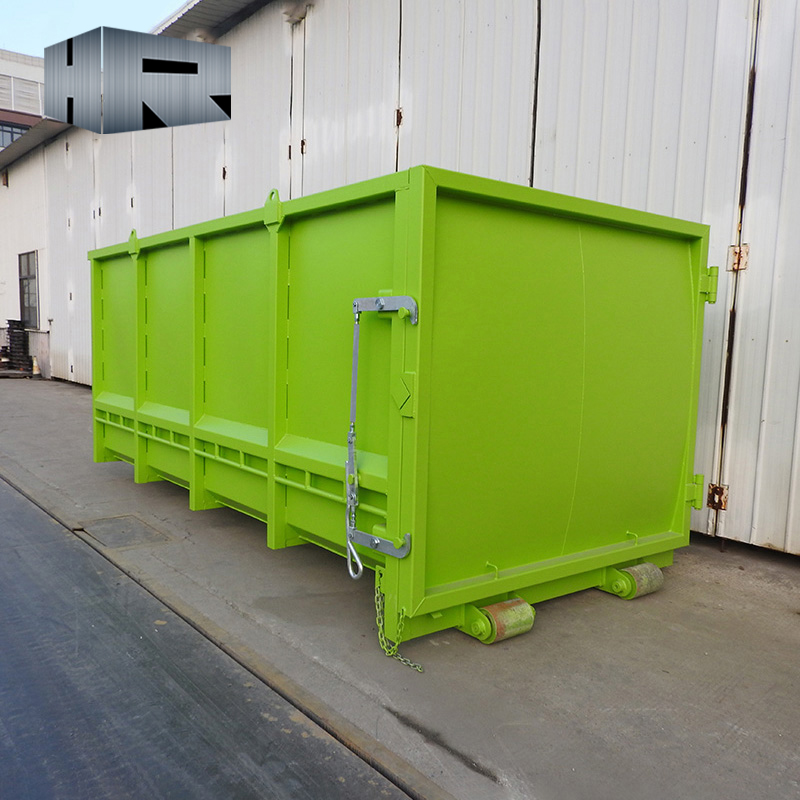
Selecting the correct container specifications ensures operational success. You must match volumetric capacity against weight limits. You must understand material constraints. This framework prevents overloading errors and structural failures.
Standard volumetric sizing ranges widely. You typically see containers measuring between 6m³ and 30m³. Each size serves distinct operational purposes. You must align these volumes strictly against specific chassis requirements.
Volume (m³) | Primary Application | Payload Characteristic | Recommended Chassis (GVM) |
|---|---|---|---|
6m³ - 10m³ | Heavy Construction / Soil | High Density (Concrete, Dirt) | Medium-Duty (12-15 Tonnes) |
12m³ - 20m³ | General C&D / Industrial | Mixed Density (Wood, Scrap) | Heavy-Duty (22-26 Tonnes) |
25m³ - 30m³ | Commercial / Retail Waste | Low Density (Cardboard, Plastics) | Multi-Axle / Trailer Systems |
Specific structural features drive distinct business outcomes. We organize these design elements into a clear evaluation matrix below. Use this tool during your procurement process.
Feature | Benefit | Business Impact |
|---|---|---|
Step-wall design & low-profile sides | Ergonomic manual loading while retaining high volume. | Faster site clearing and drastically reduced manual handling injuries. |
Barn-door style rear hinges | Allows walk-in access for heavy debris loading. | Minimizes forklift requirements on tight job sites. |
Integrated tie-down rails | Secures top loads and prevents material spillage during transit. | Ensures strict compliance regarding local road safety regulations. |
Payload density dictates your material selection. Transporting dense materials requires specific engineering. Concrete, soil, and scrap metal destroy standard mild steel containers quickly. You need high-tensile steel construction. You must demand reinforced stress points. Heavy-duty floor plates prevent warping under intense point loads. Conversely, lighter commercial waste allows thinner wall profiles. Thinner walls reduce tare weight. Lower tare weight maximizes your legal payload capacity directly.
Never assume universal compatibility across different brands. You must align bin rail dimensions exactly. Lock-in mechanisms must match your existing hydraulic arm specifications. Pay special attention to A-frame heights. A mismatched lifting bar prevents the hook from engaging safely. Measure your fleet's sub-frame width carefully. Verify external roller widths before placing bulk orders.
Modern fleets leverage these systems across diverse sectors. They move beyond basic garbage collection. Choosing the right hook lift bin allows you to dominate niche markets easily. Custom applications generate higher service margins.
Managing heavy debris dominates the construction sector. Space remains a premium commodity on congested job sites. Project managers utilize stackable container designs. These stackable units minimize the storage footprint dramatically. You deliver multiple empty containers on a single flatbed run. Workers fill them sequentially. This phased approach keeps chaotic building sites organized.
Large events and retail centers require discreet waste handling. You utilize the container as a localized, high-volume collection hub. Precision placement allows bins to sit snugly against loading docks. Operators execute precise, off-hours removal. The truck glides in, hooks the load, and departs silently. This rapid exchange happens without disrupting pedestrian workflows or closing customer parking areas.
Environmental, Social, and Governance (ESG) compliance drives modern corporate policy. You can implement multi-compartment containers easily. Some operators create temporary "pop-up" recycling hubs at community events. Pre-sorting materials at the bin level offers massive financial advantages. It reduces landfill contamination fees heavily. You separate cardboard, plastics, and glass on-site. Clean streams generate revenue at recycling plants instead of costing tipping fees.
Exploring non-traditional payloads maximizes your primary vehicle's utility. Operators transport hazardous e-waste securely using lockable lids. Agricultural firms transport rendering materials cleanly. Industrial facilities use fully sealed units for wastewater sludge transport. Liquid-tight seals prevent dangerous spills on public highways. This specialty handling transforms a basic truck into an advanced logistical tool.
Adopting this technology requires updating operational protocols. Physical equipment upgrades mean little without proper operator training. You must address safety mechanisms. You must standardize site preparation guidelines.
Traditional cable-hoist systems force operators outside the truck. Drivers manually attach heavy steel cables. This exposes them directly to snapping cables and moving traffic. Modern hydraulic models utilize remote or in-cab controls primarily. Operators remain safely seated behind bulletproof glass. This isolates them entirely during the loading cycle. Remote controls minimize the risk of crushing injuries. You eliminate slips, trips, and accidental load drops almost entirely.
Placing heavy containers requires methodical planning. Drivers cannot drop heavy loads blindly. Implement the following staging guidelines immediately:
Assess Ground Stability: Ensure the drop zone features compacted soil or reinforced concrete. Sinking rollers damage driveways.
Verify Overhead Clearance: The lifting arc requires significant vertical space. Watch out for low-hanging power lines or tree branches.
Calculate Approach Angles: The prime mover needs a straight approach path. Sharp angles prevent the hook from engaging the A-frame smoothly.
Implement Pedestrian Barriers: Block off the immediate drop zone using high-visibility cones during the hydraulic cycle.
Improper loading destroys equipment fast. Workers must distribute weight evenly across the container floor. Avoiding asymmetric loading is mandatory. Heavy materials piled strictly on one side cause severe tipping risks during the lifting cycle. Asymmetric loads also cause uneven axle wear on the prime mover. Train site personnel to load dense items first. Spread them flat. Add lighter materials on top to lower the center of gravity.
Sourcing cheap steel boxes creates expensive long-term problems. You must scrutinize potential vendors rigorously. Procurement involves verifying engineering capabilities. You need a reliable hook lift bin manufacturer dedicated to quality assurance.
Off-the-shelf products often fail in niche applications. Generic boxes lack necessary specialized features. Look for a manufacturer capable of delivering engineered additions. Your operations might require automated tarps. You may need secure, tamper-proof lids. Liquid-tight seals remain essential for sludge transport. Customized branding and specific color coding help identify specific waste streams on large commercial sites visually.
Verify baseline manufacturing standards before signing contracts. Request documentation regarding welding certifications. Substandard welds crack under heavy hydraulic tension. Investigate their anti-corrosion treatments thoroughly. Premium primer applications matter. Two-pack polyurethane top-coat processes prevent rust aggressively. Inspect the structural gusseting. Proper gussets transfer stress away from vulnerable corner joints. This extends the usable lifespan significantly.
Regulatory compliance protects your business from devastating liabilities. Ensure the manufacturer adheres strictly to regional road safety standards. Verify their load-restraint compliance features. The container must feature heavy-duty locking mechanisms. These locks secure the bin firmly to the truck chassis during highway transit. Failing locking pins lead directly to catastrophic roadway accidents.
Scaling a fleet requires predictable supply chains. Assess the vendor's ability to consistently supply standardized units as your business grows. You cannot afford mismatched equipment. Furthermore, moving parts wear out eventually. Confirm reliable access to proprietary replacement parts. You need heavy-duty ground rollers constantly. Door hinges bend. Locking mechanisms require periodic replacement. A strong vendor ships these spare parts rapidly.
Transitioning to or expanding a modern fleet ecosystem involves strategic foresight. It is less about buying raw steel containers. It focuses entirely on investing in operational agility and maximizing fleet efficiency. The drop-and-swap model eliminates wasted labor. It leverages your expensive truck chassis continuously throughout the workday. You protect your operators by utilizing safe, in-cab hydraulic controls.
Decision-makers should act systematically. Conduct a comprehensive fleet audit immediately. Map your current vehicle idle times against potential bin-drop utilization rates. Identify specific operational bottlenecks where trucks wait for manual loading. Calculate how many single-use vehicles you can replace with one multi-purpose prime mover.
We encourage readers to take the next practical step. Consult with professional engineering teams directly. Scope out custom specifications tailored to your unique waste streams. Request a localized ROI analysis from a trusted manufacturing partner today.
A: A cable hoist system uses a winch and steel cables to pull containers onto the truck bed. It is slower and requires manual cable attachment outside the cab. A hook lift utilizes a solid hydraulic arm. It engages the container's A-frame directly. This method offers much faster cycle speeds, allows in-cab operation, and provides superior precision when placing containers in tight spaces.
A: Hauling a large 30m³ container requires a heavy-duty prime mover. You typically need a multi-axle truck (such as a 6x4 or 8x4 configuration). The Gross Vehicle Mass (GVM) usually must exceed 26 tonnes. Always verify local axle weight regulations, as 30m³ of even moderately dense material quickly maximizes legal payload limits.
A: Yes. Top-tier manufacturers customize containers specifically for hazardous materials. They integrate specialized liquid-tight sealants along the rear doors to prevent leakage. They also install secure, lockable lids to prevent toxic fume emissions and unauthorized access. Specialized anti-corrosive interior coatings are applied to handle highly acidic or caustic waste streams safely.
A: Maintenance requires strict, routine greasing. Apply heavy-duty marine grease to the rear ground rollers and door hinges monthly. Perform visual wear-and-tear inspections weekly. Look for hairline cracks around the A-frame lifting bar. Check the bottom locking rails for warping. Promptly replace any seized rollers to prevent dragging, which damages client driveways and stresses the truck's hydraulics.


