- All
- Product Name
- Product Keyword
- Product Model
- Product Summary
- Product Description
- Multi Field Search

Views: 0 Author: Site Editor Publish Time: 2026-05-16 Origin: Site


Sizing a waste container incorrectly is a primary driver of cost overruns and project delays. Underestimating your debris leads to secondary rental fees. Overestimating means paying premium rates just to haul empty air. A "10-yard" measurement refers strictly to internal volume. It tells you nothing about physical dimensions or weight capacity. This missing context creates a critical blind spot for project managers and homeowners alike. Proper planning prevents budget leaks and timeline disruptions. This guide breaks down exact spatial requirements, weight limitations, and logistical clearances required to evaluate if a 10-yard container is the correct asset for your specific scope of work. You will understand how to navigate municipal weight limits, prepare your site for safe delivery, and manage heavy materials. Read on to ensure your next disposal project runs smoothly from drop-off to final pickup.
Volume Equivalency: 10 cubic yards holds roughly 50–70 contractor bags, or 3 to 4 standard pickup truck loads.
Physical Footprint: Roughly the size of a parked 4-door sedan, though exact LxWxH dimensions vary by manufacturer.
The Weight Trap: Dense materials (concrete, dirt) will exceed maximum weight limits long before the physical volume is filled.
Clearance Needs: Delivery requires a flat surface with roughly 100 feet of linear clearance and 20+ feet of overhead space.
Internal volume remains strictly regulated across the waste management industry. A 10-yard bin always provides exactly 10 cubic yards of interior space. You can visualize this capacity as roughly 10 standard washing machines or household kitchen ovens packed together. However, the physical shell housing this volume changes.
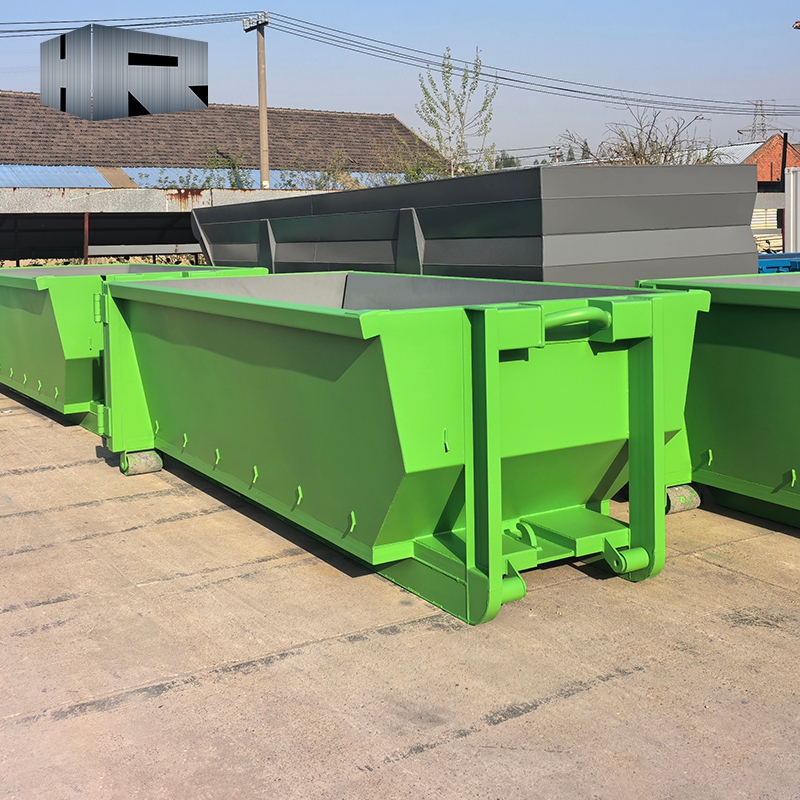
External measurements are not universal. Depending on the roll off dumpster manufacturer, engineering profiles adapt to different logistical needs while maintaining the exact 10-yard internal volume. Facilities utilize different shapes to solve specific job site challenges.
Standard / Low-Profile: Typically measures 15’ L x 8’ W x 2’ H. The lower walls make side-loading heavy debris much easier. Workers can toss heavy concrete chunks over the rim without excessive lifting.
Compact / Tall-Profile: Usually measures 10’ L x 8’ W x 4’ H. These models are engineered specifically for tight residential driveways. They fit into short turnaround spaces but require lifting debris higher to clear the walls.
Mid-Range: Often measures 14’ L x 7.5’ W x 3.5’ H. This acts as a versatile middle ground for mixed household cleanouts.
Profile Style | Typical Dimensions (L x W x H) | Primary Advantage | Best Use Case |
|---|---|---|---|
Low-Profile | 15' x 8' x 2' | Low walls reduce lifting strain | Heavy masonry, dirt, concrete |
Tall-Profile | 10' x 8' x 4' | Takes up minimal driveway length | Tight urban streets, short driveways |
Mid-Range | 14' x 7.5' x 3.5' | Balances footprint and wall height | General remodeling, attic cleanouts |
Regardless of the exact engineering profile, you must plan your footprint carefully. Allocate a ground footprint equivalent to a standard 4-door parked sedan. This mental benchmark ensures you reserve enough immediate ground space before factoring in the delivery truck.
Common Mistake: Relying strictly on the container's footprint. Always account for the swinging back door. Many 10-yard bins feature a rear door. It needs an extra 4 to 6 feet of clearance to swing open entirely.
Volume capacity rarely creates the bottleneck for heavy material projects. The legal road weight limit acts as the true constraint. You can easily fill a container halfway with dense materials and still trigger massive overweight penalties.
While the heavy-duty steel chassis of a 10-yard bin often structurally supports up to 9 or 10 tons, you cannot legally transport that much weight. Standard rental agreements typically only include a 1.5 to 3-ton (3,000–6,000 lbs) disposal allowance. Municipal Department of Transportation (DOT) regulations cap the total gross weight of commercial hauling trucks. Exceeding these limits damages public roads and incurs severe fines for the hauling company.
A 10-yard roll off dumpster is the absolute industry standard for disposing of concrete, asphalt, dirt, and masonry. You might wonder why providers refuse to rent larger 20-yard or 30-yard containers for dirt removal. Filling a larger container with these materials renders the truck illegally overweight for municipal roads. The truck hoist would also struggle to lift a 30-yard bin filled entirely with wet dirt.
Best Practice: Always cover dirt and concrete during rainstorms. A heavy downpour saturates debris quickly. Water weight counts against your final tonnage limit. Tarps save you from paying premium disposal fees for rainwater.
Translating cubic yards into real-world projects requires practical benchmarks. You need to know exactly how much demolition debris fits inside before scheduling your delivery.
A 10-yard container perfectly matches small to medium renovation tasks. It easily handles:
Deck Removal: Complete teardown and disposal of a 250-square-foot wooden deck.
Roofing Projects: About 1,500 square feet of single-layer asphalt roof shingles.
Room Guts: A small bathroom or half-kitchen gut. This includes outdated cabinets, porcelain tubs, old fixtures, and broken drywall.
If you are tackling household clutter rather than construction debris, a 10-yard container provides ample space. It holds roughly 10 medium-sized pieces of furniture, assuming you break them down first. Think of items like 3'x2'x4.5' wooden dressers. It also perfectly accommodates a single-car garage cleanout filled with standard household junk, old toys, and broken lawn equipment.
Transfer stations enforce strict environmental regulations. Do not calculate space for materials you legally cannot throw away. Keep the following items out of your bin:
Liquid Chemicals: Paint, thinners, solvents, and motor oil.
Hazardous Waste: Pesticides and medical waste.
Asbestos: Requires specialized remediation handling.
Automotive Parts: Tires and car batteries.
Appliances: Refrigerators or AC units containing Freon (unless explicitly permitted by the local facility).
A smooth delivery day relies entirely on your site preparation. Hauling trucks are massive commercial vehicles. They operate very differently than standard delivery vans. You must prepare the staging area to avoid delivery failure.
Delivery trucks require approximately 100 feet of straight-line clearance. The driver must safely back in, align the rails, and roll the bin off the hydraulic hoist. Tight turns directly into a driveway rarely work. The truck's lifting arm also requires 20 to 30 feet of vertical clearance. Look up before selecting your drop spot. Watch out for low-hanging tree branches, low-draping power lines, or structural overhangs from your roof.
Heavy containers require a flat, hard surface. Asphalt or concrete driveways remain ideal. Soft earth or steep inclines can cause the bin to shift dangerously. A loaded container sinking into mud often requires a heavy-duty tow truck to extract, costing you significant time and money.
Pro Tip: Place three-quarter-inch plywood boards exactly where the container’s steel rollers will rest. This distributes the weight and prevents permanent scratches or cracks on your concrete driveway.
Evaluate your street placement necessities early. If your driveway is too tight, you may need to place the bin directly on a public street. Placing a container on public property typically requires a municipal permit. You also need strict adherence to HOA regulations. Check your local ordinances at least five days prior to your rental date to secure necessary permits.
Base rental rates look attractive online. However, final invoices often surprise underprepared renters. Understanding how providers calculate costs helps you control the final budget.
Base quotes generally factor in three distinct variables. First, your geographic location dictates the county disposal rates. Second, material type matters heavily. Construction and demolition (C&D) debris often processes at different rates than standard municipal solid waste. Finally, the pre-purchased weight establishes your base tonnage allowance.
If the bin exceeds the pre-purchased 1.5 or 3-ton limit, facilities charge prorated fees per additional ton. Landfill scales measure the truck upon arrival and again after dumping. The difference determines your exact debris weight. Overweight fees act as the most common budget breaker for novice renters.
Whether your project involves residential cleanouts or larger commercial operations, knowing how to leverage a roll off dumpster correctly prevents surprise fees. Avoid these common operational penalties:
Dry Run Fees: Providers charge this fee if the driver cannot access the drop-off or pick-up site. Blocked gates, parked cars, or lacking overhead clearance trigger this penalty. The driver leaves, and you pay for wasted time.
Overfill Violations: Debris cannot extend past the top rail of the container. Haulers must cover the load safely. Tarps must sit flat for legal highway transport. Overfilled bins will be rejected at pickup. You will have to unload the excess manually and reschedule the truck.
A 10-yard container offers a highly efficient footprint for focused projects. It acts as the optimal choice for dense, heavy materials like concrete, dirt, and roofing shingles. It also serves perfectly for compact residential cleanouts where property space remains at an absolute premium.
Before booking your rental, audit your debris type thoroughly to ensure you won't trigger unexpected overweight fees. Measure your driveway or street space against the 4-door sedan benchmark. Check your overhead clearance for tree limbs. Finally, verify local permit requirements with your municipality to keep your project fully compliant.
A: Yes. A commercial front-load dumpster is typically stationary, features closing lids (often 6'2" W x 7'6" D x 6'1.5" H), and is meant for routine B2B waste pickup. A roll off dumpster is an open-top temporary container delivered on a specialized truck chassis.
A: As a rule of thumb, one cubic yard of solid concrete weighs about 4,000 lbs. If you are disposing of dirt, rock, or concrete, you will likely hit your weight limit when the 10-yard container is only one-third to one-half full.
A: Yes, it easily fits in a single-car driveway space, provided the delivery truck has the necessary straight-line approach clearance to drop it off.


