- All
- Product Name
- Product Keyword
- Product Model
- Product Summary
- Product Description
- Multi Field Search

Views: 0 Author: Site Editor Publish Time: 2026-06-16 Origin: Site


Standard container end-doors often create major accessibility bottlenecks. Loading oversized cargo, managing complex inventory, or setting up rapid-deployment units can quickly become logistical nightmares. You waste valuable hours shifting front-loaded pallets just to reach the materials parked at the back. A Side Open Container solves this problem immediately. It is a specialized ISO shipping container featuring heavy-duty bi-fold doors along the entire longitudinal side. This engineering approach removes the single choke point found in traditional units. You get comprehensive lateral access for rapid forklift maneuvers and safe personnel entry. This guide provides an objective framework to help you evaluate key features, structural realities, and investment implications before you purchase or modify a unit. You will learn how to match container specifications to your workflow, maximize your operational efficiency, and avoid common site preparation mistakes.
Maximized Accessibility: Side-opening doors allow for rapid forklift loading, multi-point access, and retrieval of specific pallets without unloading the entire unit.
Size Variations: Available in standard heights and as a high cube side opening door container for maximum vertical volume.
Premium Cost but High ROI: While they cost more than standard dry vans, the reduction in labor hours for loading/unloading often offsets the initial premium.
Site Prep Requirement: Requires a perfectly level foundation to prevent structural racking and ensure the large side doors open and close safely.
Removing an entire corrugated steel wall significantly changes how a container bears weight. Engineers must compensate for this missing sheer strength. They achieve this by installing reinforced side beams along the floor and roof lines. Heavy-duty steel hinges anchor the bi-fold doors directly to the corner posts and the newly reinforced top rails. These structural upgrades prevent the roof from sagging when you fully open the side doors. You will notice the floor joists are often thicker than those found in standard dry vans. This extra steel ensures the unit maintains structural integrity during heavy forklift traffic.
You can choose between different access mechanics based on your daily operations. Full side access remains the most popular configuration. In this setup, bi-fold doors open along the entire 20-foot or 40-foot length. You can fold these doors back flat against the container exterior. This creates an unobstructed bay for loading large equipment. Alternatively, partial side-open configurations use two smaller doors. These provide localized access to specific zones without exposing the entire inventory to the elements. They work well for partitioned storage spaces.
Despite the extensive modifications to the side wall, these units retain full International Organization for Standardization (ISO) compliance. They feature the exact same corner castings found on standard shipping containers. This means you can lift, stack, and secure them using standard maritime and rail equipment. Global transport networks process them just like standard freight. The reinforced frame ensures they can bear the massive weight of other containers stacked on top, provided the side doors remain closed and locked.
Adding multiple door panels increases the potential points of entry. Manufacturers address this vulnerability through robust factory-installed security measures. You can expect multiple layers of protection to keep your valuable cargo safe from theft and vandalism.
Heavy-duty locking bars: Each door panel features vertical steel bars spanning from the floor to the roof.
Anti-rack rings: These steel rings prevent the doors from shifting upward or downward when secured.
Factory-installed lock boxes: Welded steel housings conceal the padlocks. They prevent thieves from cutting the shanks with bolt cutters.
Interlocking door seals: The bi-fold panels overlap tightly, creating a mechanical barrier against forced entry.
Selecting the correct footprint requires balancing your storage needs against your physical site constraints. A 20-foot unit fits comfortably in tight urban lots or narrow driveways. It offers ample lateral access without demanding excessive clearance. A 40-foot unit requires significant operational space. You need enough room not only for the container itself but also for the swing radius of the large bi-fold doors and the forklifts accessing them.
Standard Footprint Comparison Matrix | ||
Specification | 20ft Unit | 40ft Unit |
|---|---|---|
External Length | 20 feet | 40 feet |
External Width | 8 feet | 8 feet |
Ideal Use Case | Tight lots, field equipment | Large warehouses, long machinery |
Forklift Maneuverability | High (short turning radius) | Moderate (requires wide aisles) |
Vertical space frequently dictates storage efficiency. A standard container offers an external height of 8 feet 6 inches. Upgrading to a high cube side opening door container gives you an external height of 9 feet 6 inches. This extra foot of vertical volume drastically changes how you can utilize the interior.
You should view this upgrade through a strict decision lens. Opt for the extra height if you need to accommodate taller manufacturing machinery or oversized pallets. The extra headroom also proves invaluable for future architectural modifications. If you plan to install drop-ceilings, thick floor insulation, or complex overhead ventilation systems, the standard height feels cramped. The extra foot ensures your personnel can stand comfortably after you install these overhead fixtures.
You must also decide between single-side access and double-side access. Single-side access provides bi-fold doors on one longitudinal wall, leaving the opposite wall solid. This solid wall provides excellent structural rigidity. It also gives you a reliable surface for mounting heavy shelving systems or tool racks.
Double-side access units feature folding doors on both sides. People often call these tunnel containers. They offer unparalleled workflow speed, allowing personnel to load from one side and unload from the other simultaneously. However, removing both solid walls introduces engineering challenges. These units require massive roof reinforcements, which drastically increases the unit cost and reduces internal ceiling clearance. Most operators find single-side access perfectly meets their operational demands.
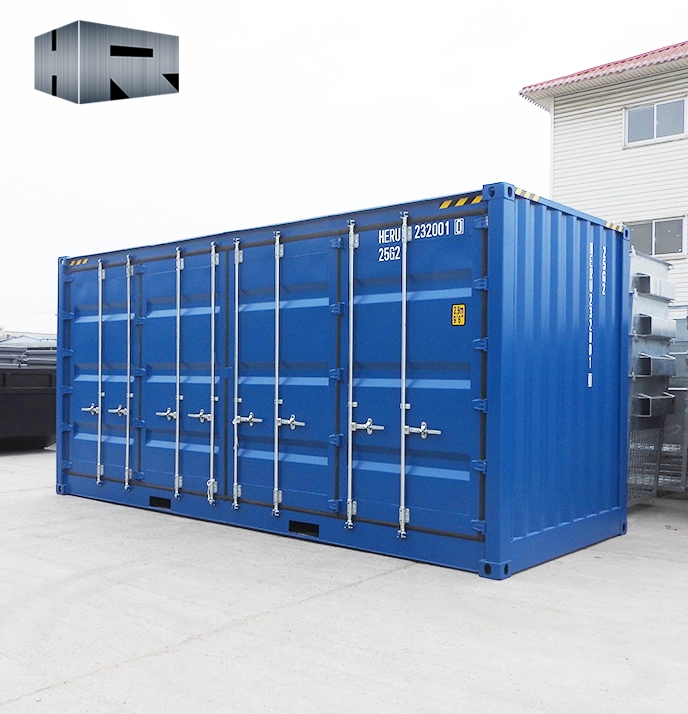
Traditional containers force operators into a strict "last-in, first-out" (LIFO) workflow. If you need a pallet stored near the front wall, you must painstakingly unload every pallet sitting behind it. This process wastes labor hours and risks cargo damage due to excessive handling. The side-door design shatters these limitations. Forklift operators can approach the unit laterally. They can select specific pallets from any position without disturbing the surrounding inventory. You can load multiple pallets simultaneously using two forklifts working side-by-side. This operational speed drastically cuts your labor costs and accelerates turnaround times at busy loading docks.
Industrial operations frequently deploy specialized equipment into remote or harsh environments. A Side Open Container serves as an ideal protective housing. The wide access points allow you to slide heavy generators, industrial water treatment systems, or telecommunications gear directly into the space. Once installed, the side doors provide crucial advantages. You can throw them open to vent exhaust heat during operation. Maintenance crews gain instant, unhindered access to every side of the machinery for routine servicing or emergency repairs. Standard containers trap heat and force technicians to work in uncomfortably tight quarters.
Experiential retail relies on rapid deployment and high visual impact. Modifying standard dry vans for pop-up shops, cafes, or event booths usually requires cutting massive holes in the corrugated walls. You then have to weld heavy steel frames to replace the lost structural integrity. Side-open units eliminate this costly fabrication step entirely. The structural engineering is already done. You simply deliver the unit to the event space, open the massive side doors, and immediately expose your branded interior to the foot traffic. When the event ends, you lock the doors and move to the next city safely.
Traditional dry vans forgive minor ground unevenness. Side-open units do not. They are highly susceptible to structural "racking." Racking occurs when the corners rest on uneven planes, causing the entire steel frame to twist slightly out of square. If the ground lacks perfect leveling, the massive side doors will bind against their frames. You will find it physically impossible to close the doors or latch the locking bars. Site preparation requires precise grading. You must lay a perfectly level foundation using crushed gravel pads, concrete footings, or heavy-duty industrial timbers before delivery. Do not skip this step.
You must manage structural tension carefully during transport. While these units are ISO certified for heavy loads, the open-wall design creates specific vulnerabilities. Opening the side doors while the unit is fully loaded and suspended in the air will warp the frame. The heavy steel doors rely on a perfectly square frame to swing freely. Never attempt to lift or shift the container with the side doors unsecured. You must properly strap all heavy cargo to the internal D-rings. Ensure your team locks every single side-door panel tightly before the crane or chassis lifts the unit. This prevents dangerous structural twisting during transit.
Keeping water out requires constant vigilance. Standard containers rely on solid steel walls to shed rain. Side-open units rely entirely on extensive rubber gasket sealing mechanisms. The bi-fold design introduces dozens of linear feet of additional door seals. These gaskets face constant exposure to UV rays, freezing temperatures, and physical compression. Over time, the rubber can degrade, crack, or pull away from the metal. You face a much higher need for routine maintenance to keep the unit wind and water-tight (WWT). Schedule quarterly inspections. Clean the gaskets with mild soap and apply protective silicone lubricants to prevent the rubber from drying out.
You must prepare for a significant cost premium. These specialized units frequently cost 30% to 50% more than standard dry vans of the same length. The extra steel reinforcement, complex hinges, and massive rubber seals drive up the manufacturing costs. Furthermore, shipping lines rarely use them for standard maritime freight. This means they do not slowly age and filter down into a cheap, heavily-used secondary market. The vast majority of these units are sold in "One-Trip" condition. They transport one load of clean cargo from the overseas factory to your local port, ensuring you receive a pristine, rust-free asset.
Purchasing the bare container only solves half your logistical puzzle. You must integrate specific add-ons to maximize the functionality of the wide opening.
Heavy-duty ramps: You cannot use standard end-door ramps. You require custom-width ramps designed to span the specific width of the lateral opening for safe forklift entry.
Custom shelving brackets: Take advantage of the solid back wall. Weld or bolt heavy-duty brackets to the corrugation to keep smaller inventory off the floor.
Climate control and insulation: If storing sensitive equipment, install spray foam insulation and a dedicated HVAC unit to prevent internal condensation from damaging your assets.
Choosing the right supplier dictates the success of your installation. A Side Open Container requires careful delivery logistics. Use this chart to evaluate potential vendors objectively.
Vendor Evaluation Chart | ||
Evaluation Category | Questions to Ask the Supplier | Why It Matters |
|---|---|---|
Warranty Coverage | Do you provide a specific warranty on the side-door rubber seals? | Seals are the primary point of failure for weatherproofing. |
Delivery Constraints | Does your tilt-bed truck require extra turning radius for side-door placement? | The truck must align perfectly with your prepared foundation pad. |
Structural Verification | Can you provide documentation on the floor load limits? | Ensures your heavy forklifts will not punch through the flooring. |
Inspection Rules | May I test the door hinges before finalizing the delivery? | Confirms the unit arrived without racking damage. |
A side open container operates as a specialized, high-utility asset designed to eliminate loading bottlenecks and improve access speed. It replaces the slow, frustrating LIFO loading method with rapid, lateral inventory management. While the upfront investment and site preparation demands are higher, the resulting operational efficiency pays long-term dividends.
Your next steps involve careful site planning. Measure your available footprint and calculate the swing radius required for your forklifts. Compare your vertical clearance needs to determine if you require a high cube upgrade. Finally, request itemized quotes from reputable suppliers that include the costs for custom ramps and proper delivery placement based on your actual operational needs.
A: Yes, provided the doors are fully closed and locked. They meet ISO standards and utilize the standard corner posts for weight-bearing. The reinforced upper and lower rails compensate for the lack of a solid steel wall, ensuring they can safely support the weight of fully loaded containers stacked above them in a depot setting.
A: Yes, but you must secure the heavy cargo properly to the internal D-rings. Crucially, all side doors must be tightly locked shut prior to the chassis lift. Transporting the unit with unsecured or open doors while loaded causes severe structural twisting, which permanently damages the door alignment and frame.
A: One-trip units are certified Wind and Water Tight (WWT). However, the extensive rubber seals around the bi-fold doors require periodic inspection. Because they have vastly more linear feet of gaskets than standard containers, you must regularly clean and lubricate the seals to ensure long-term weather resistance and prevent leaks.


