- All
- Product Name
- Product Keyword
- Product Model
- Product Summary
- Product Description
- Multi Field Search

Views: 0 Author: Site Editor Publish Time: 2026-06-23 Origin: Site


Purchasing a heavy-duty transport system fundamentally transforms daily fleet operations across job sites. Construction managers frequently underestimate how critical chassis selection is to overall productivity. Choosing poorly ultimately leads to severely delayed projects, damaged equipment, and stranded assets. Mismatched chassis specifications and under-specified hydraulic capacities create immediate, severe payload bottlenecks. You also face accelerated equipment wear when relying on incorrectly sized hoists for heavy materials. These operational missteps compromise crew safety and drastically lower your daily haul cycles. This comprehensive guide bypasses typical manufacturer marketing claims to provide a rigid framework for evaluating equipment. We detail exactly how to properly size, specify, and source systems tailored for high-cycle construction environments. You will learn actionable steps to match your chassis perfectly and avoid common procurement traps.
Chassis synergy is non-negotiable: Your truck’s Cab-to-Axle (CA) or Cab-to-Tandem (CT) measurements dictate hoist size and bed length—mismatches cause dangerous weight distribution issues.
Calculate true payload, not just hoist capacity: The weight of the hooklift system and the flatbed itself eats into your Gross Vehicle Weight Rating (GVWR).
Hooklifts outperform roll-offs in tight footprints: For urban construction sites, the variable angle and precise drop of a hooklift system offer superior maneuverability and faster cycle times.
Material grades matter: In high-impact construction use, high-tensile steel (like Hardox or AR400) floors yield a better ROI than standard mild steel, despite the higher upfront cost.
Modern construction demands absolute asset utilization. Relying on single-purpose vehicles creates scheduling nightmares. Transitioning to a modular fleet system solves this inherent inefficiency. A single chassis equipped with a Heavy duty hook lift flatbed replaces multiple dedicated trucks. You no longer need separate dump trucks, flatbeds, and water tanks sitting idle. One driver simply swaps bodies to meet the daily schedule.
Operational agility increases exponentially. You gain the ability to drop a flatbed directly at a job site. Ground-level deployment allows crews to load skid steers, lumber, or scaffolding safely. The truck does not have to wait during loading. It leaves immediately to haul other materials elsewhere. This concurrent workflow eliminates costly downtime.
Labor efficiency improves alongside equipment utilization. You eliminate the constant need for a forklift or a dedicated loading dock at every single site. One single operator handles the entire process. They deploy and retrieve heavily loaded assets independently. Furthermore, they perform these tasks entirely from the safety of the cab. This reduces manual labor requirements and minimizes job site injuries.
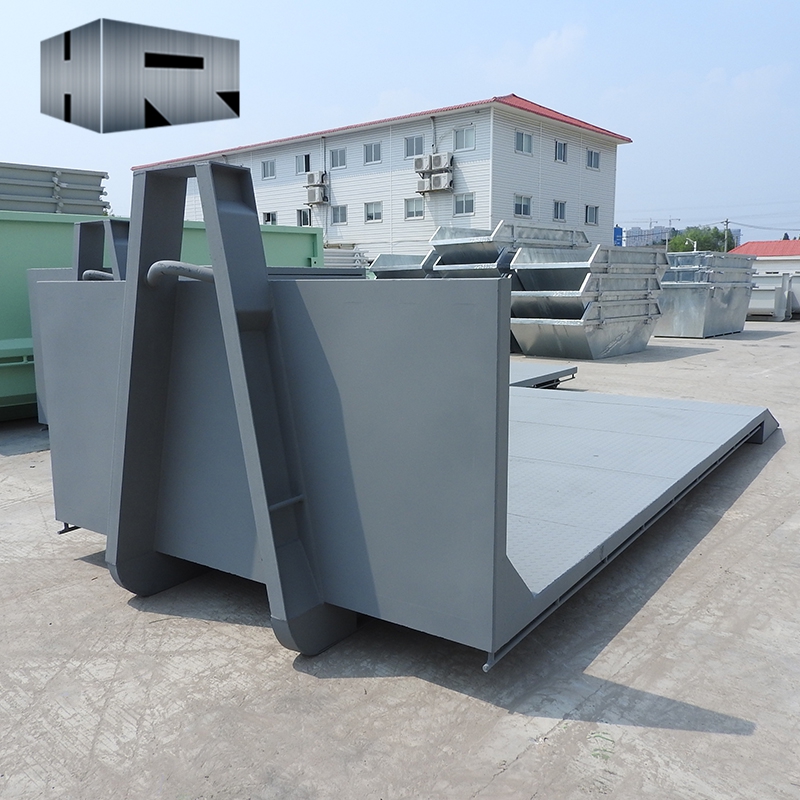
Understanding the mechanical differences between deployment systems is crucial. Fleets often default to roll-off cables out of habit. However, hook mechanisms provide distinct advantages for construction environments.
Loading angles and site constraints dictate your choice. Hook systems engage the A-frame from off-center angles easily. They require significantly less linear space to deploy bodies safely. This makes them critical for tight residential zones or crowded urban construction sites. Conversely, roll-off systems demand precise straight-line alignment. They need a much longer runway to winch the bed onto the rails safely.
Cycle speeds directly impact your daily haul volumes. Hook mechanisms complete drop-and-swap cycles in merely one to two minutes. Operators manage everything via in-cab controls. This reduces dangerous slip-and-fall risks associated with hooking up greasy winch cables on traditional roll-offs. Faster cycles mean more trips per shift.
Versatility sets these two systems apart. Roll-offs excel primarily in municipal waste management. Hook systems natively support highly diverse attachments. Your truck seamlessly transitions from hauling lumber to functioning as a Hook Lift Dump Bed for aggregates.
Feature | Hooklift System | Cable Roll-Off System |
|---|---|---|
Cycle Time | 1-2 minutes | 5-10 minutes |
Operator Position | Inside the cab (Safe) | Outside the cab (Exposed) |
Alignment Requirement | Up to 30-degree off-center approach | Strict straight-line approach |
Linear Space Needed | Minimal footprint | Length of truck plus length of bed |
Matching your chassis dimensions to the hoist is paramount. You must calculate precise Cab-to-Axle (CA) or Cab-to-Tandem (CT) measurements. These numbers dictate your maximum hoist length. They also determine your legal weight distribution across the front and rear axles. Ignoring this math causes dangerous steering issues. Overloaded rear axles invite severe regulatory fines.
Gross Vehicle Weight Rating (GVWR) considerations require brutal honesty. Many buyers only look at the hoist rating. You must calculate true net payload instead. Take your total GVWR and subtract the tare weight of the chassis. Then, subtract the weight of the heavy steel hoist. Finally, subtract the empty flatbed weight. The remaining number is your actual legal payload capacity.
Always size your equipment for the absolute worst-case scenario. Specify a hoist capacity ten to twenty percent higher than your maximum anticipated load. Mud-soaked timber or wet concrete debris weighs significantly more than dry material. This buffer prevents hydraulic stalling under peak loads. It also prevents premature pump wear and blown seals.
Jib articulation fundamentally changes how you handle sensitive loads. You must evaluate articulating (sliding) jibs versus fixed jibs. Fixed jibs operate on a single swing arc. Sliding jibs allow operators to adjust the hook position dynamically. They enable flatter load angles during pickup and drop-off. This flat angle is ideal for beds carrying sensitive electronic equipment or tracked machinery.
Construction environments destroy inferior equipment rapidly. The materials used in your Hooklift Flatbed determine its operational lifespan. You must select flooring materials based on anticipated abuse.
Standard Wood (Oak/Pine): Offers adequate traction for rubber-tired equipment. It absorbs minor impacts well. However, tracked machinery shreds wood decking quickly.
Diamond Plate Mild Steel: Provides moderate durability and structural rigidity. It resists rot entirely. However, heavy point-loads easily warp standard mild steel over time.
High-Tensile Steel (AR400/Hardox): Delivers maximum yield strength. It resists deformation from heavy excavators dropping attachments. This material extends the bed's lifespan drastically.
For heavy equipment hauling, specify closely spaced understructure crossmembers. Demand twelve-inch centers instead of standard sixteen-inch centers. Next, examine the weld quality and rail design closely. Look for continuous structural welds across all main stress points. Avoid stitch welds on primary weight-bearing joints. Ensure the A-frame hook point features thick, reinforced gussets. These gussets handle violent shock loads during pickup cycles.
Regulatory compliance is just as important as structural strength. Integrated securement prevents catastrophic load shifts. Require flush-mounted D-rings embedded directly into the steel deck. Install heavy-duty stake pockets and continuous side rub rails. These components must meet strict FMCSA (Federal Motor Carrier Safety Administration) cargo securement standards. Heavy machinery requires specific Working Load Limit (WLL) ratings.
Bulkheads protect your most valuable asset: the driver. Evaluate the height and structural rating of the front bulkhead. It must stop shifting loads effectively. Steel I-beams, concrete blocks, or loose pipes become deadly projectiles during hard braking. A reinforced, cab-high bulkhead provides necessary impact deflection.
Hydraulic dynamics dictate how efficiently your equipment moves. The pump and cylinder configurations act as the heart of the system. Understanding pressure ratings helps you select the correct setup.
System Type | Operating Pressure | Primary Characteristics | Best Application |
|---|---|---|---|
High-Pressure | 3,500+ PSI | Lighter weight, smaller cylinders, faster cycle speeds. | High-cycle fleets prioritizing max payload. |
Low-Pressure | Under 3,000 PSI | Bulkier cylinders, slower cycles, highly durable. | Remote sites with deferred maintenance habits. |
Dual-pivot versus single-pivot mechanisms define functionality. Single-pivot systems basically drag the container up onto the rails. Dual-pivot systems offer a true dumping capability. They articulate at two points. This configuration is absolutely essential if you plan to swap your Hooklift Flatbed for a bulk material dumping application.
Controls and safety lockouts protect both the operator and the machinery. Require in-cab proportional controls. Proportional valves allow operators to feather the hydraulic flow smoothly. This prevents jerky movements that shock the chassis frame. Additionally, mandate mechanical rear body tie-downs. These passive locks secure the flatbed automatically during highway transit. They prevent vertical bouncing when hitting rough terrain.
Acquiring heavy transport machinery requires careful technical vetting. Making hasty procurement decisions leads to long-term operational headaches. You must weigh the risks between different acquisition channels.
When evaluating used equipment, mechanical scrutiny is vital. You must validate the hydraulic pump pressure under actual load. Check the A-frame mast for hairline metal fatigue cracks. Inspect every single cylinder seal for weeping fluid. Buying used makes sense for backup units, but primary production trucks demand reliability. New equipment offers comprehensive warranty protection. It allows you to specify custom bed lengths. More importantly, buying new ensures the hoist matches your exact chassis specifications perfectly.
Lead times and installation integration dictate your deployment schedule. Factor in a three-to-six month lead time for custom upfitting. Rushing the process invites danger. Poor Power Take-Off (PTO) and pump installations plague uncertified upfitters. Incorrect PTO gear ratios destroy hydraulic pumps rapidly. Always utilize certified facilities that understand truck frame metallurgy.
Shortlisting manufacturers requires looking beyond the brochure. Vet your suppliers based on their regional support networks. Verify the immediate availability of replacement hydraulic parts. Most importantly, insist on the standardization of hook heights. The industry uses multiple standards, including 36-inch, 54-inch, and 61.75-inch heights. Matching your new equipment to your existing fleet prevents operational lock-in and stranded assets.
The best equipment perfectly balances maximum legal payload with job site maneuverability. Do not oversize the hoist at the expense of your net hauling capacity.
Safety and cycle speeds improve drastically when transitioning from manual cable systems to hydraulic hook designs.
Material selection dictates longevity. Invest in high-tensile steel crossmembers and decking for harsh demolition or heavy machinery environments.
Next Steps: Audit your current truck chassis specifications carefully. Consult directly with a certified local upfitter to run a comprehensive weight distribution calculation before committing to any specific hoist size.
A: No. The truck must meet minimum Gross Vehicle Weight Rating (GVWR) requirements suitable for the combined weight of the hoist, bed, and intended cargo. Additionally, the chassis requires clear, unobstructed frame space behind the cab to accommodate the hydraulic reservoir, control valves, and mounting brackets without interfering with air tanks or exhaust routing.
A: It depends entirely on the truck's weight classification, not the hoisting mechanism itself. If the combined Gross Vehicle Weight Rating (GVWR) of the truck, hoist, bed, and cargo exceeds 26,000 pounds, a Commercial Driver’s License (CDL) is federally required. Lighter chassis setups under this threshold do not require one.
A: Yes, provided it utilizes a dual-pivot hoist mechanism. Dual-pivot hoists allow the system to articulate differently during the final lift stage. This enables specialized dumping attachments to reach steep 50-degree dump angles. This angle efficiently sheds sticky aggregates, topsoil, or wet gravel just like a traditional dedicated dump truck.
A: There is no single universal standard. The industry primarily uses three common heights: 36 inches, 54 inches, and 61.75 inches. You must match the hook height of your new hoist to the A-frames on your existing fleet. Mixing heights prevents trucks from picking up certain beds, crippling your fleet's interchangeability.


